Table of Contents
Introduction
I have seen that pantoprazole has become one of the most commonly used medicines among proton pump inhibitors (PPIs), especially in combination with domperidone.
It is available at almost every pharmacy, mainly because of its high demand in daily practice. Whether it is for common stomach-related problems like acidity and reflux, or for protecting the stomach from the side effects of other medicines such as NSAIDs, pantoprazole is widely used. However, despite its frequent use, many people are still unaware of the correct way and timing to take it, which can significantly affect how well the medicine works.
Doctors commonly prescribe pantoprazole for problems like acidity, acid reflux (GERD), and stomach ulcers. When there is too much acid in the stomach, it can lead to symptoms such as heartburn, chest discomfort, and a sour or acidic feeling coming up into the throat. By reducing this excess acid, pantoprazole not only helps relieve these symptoms but also gives the stomach and food pipe (esophagus) time to heal properly.
Classification
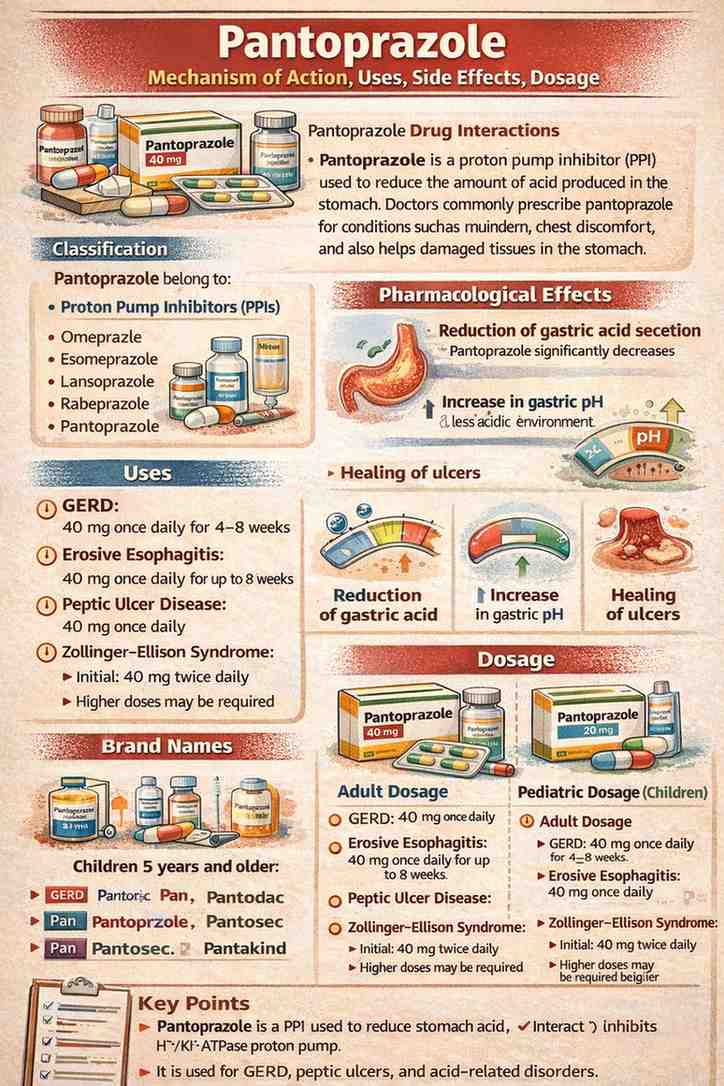
Pantoprazole belongs to the class of drugs known as Proton Pump Inhibitors (PPIs).
Other drugs in this class include:
- Omeprazole
- Esomeprazole
- Lansoprazole
- Rabeprazole
- Pantoprazole
All these drugs work by blocking the proton pump responsible for acid secretion in the stomach.
Mechanism of Action
I know that many patients are very cautious when it comes to taking medicines. They often wonder what exactly this medicine will do inside their body, how it works, and whether it can cause any harm. It is completely natural to have these questions. So, before we move ahead, let’s understand in simple terms how pantoprazole actually works inside the body.
Pantoprazole works by blocking the proton pump (H⁺/K⁺-ATPase enzyme) located in the parietal cells of the stomach. This enzyme is responsible for the final step in the production of gastric acid.
How it works step by step
- Pantoprazole reaches the parietal cells of the stomach lining.
- In the acidic environment of these cells, the drug becomes activated.
- The active form of pantoprazole binds to the proton pump (H⁺/K⁺-ATPase).
- This binding blocks the final step of acid secretion in the stomach.
- As a result, the production of gastric acid is significantly reduced.
Because this inhibition is irreversible, acid secretion remains suppressed until new proton pumps are produced by the body.
Pharmacological Effects
Now let’s talk about the situations where pantoprazole can actually help you and why it is often considered a go-to medicine by doctors.
Since this drug works by reducing excess stomach acid, it becomes useful in a variety of conditions where acid plays a major role in causing symptoms or damage. Many patients come with complaints like persistent acidity, burning sensation in the chest (heartburn), acid reflux, or discomfort after meals — and in such cases, pantoprazole is commonly prescribed to provide relief. It is also widely used in conditions like GERD, stomach and duodenal ulcers, and even to protect the stomach when certain medicines like NSAIDs are being taken.
In simple terms, whenever excess acid is the underlying problem, pantoprazole becomes a very effective and commonly trusted option in clinical practice.
Relief from stomach acid problem
It significantly decreases the production of hydrochloric acid in the stomach. In my opinion this is a quality drug for stomach acid problem
Increase in gastric pH
When acid production decreases, the pH of the stomach increases, creating a less acidic environment.
Healing of ulcers
Lower acid levels allow gastric and duodenal ulcers to heal more effectively.
Uses
It is commonly used in the treatment of the following conditions:
- Gastroesophageal reflux disease (GERD)
- Peptic ulcer disease
- Erosive esophagitis
- Zollinger–Ellison syndrome
- Prevention of NSAID-induced ulcers
- Helicobacter pylori eradication therapy (in combination with antibiotics)
Dosage

The dosage of pantoprazole depends on the condition being treated, patient age, and severity of symptoms. It is usually taken once daily before meals, preferably before breakfast.
Adult Dose
Common adult doses include:
GERD (Gastroesophageal Reflux Disease)
- 40 mg once daily for 4–8 weeks
Erosive Esophagitis
- 40 mg once daily for up to 8 weeks
Peptic Ulcer Disease
- 40 mg once daily
Zollinger–Ellison Syndrome
- Initial dose: 40 mg twice daily
- Dose may be increased depending on acid secretion.
It is available as 20 mg and 40 mg tablets, and also as an intravenous injection in hospital settings.
Pediatric Dose (Children)
It may be used in children, usually for GERD or erosive esophagitis.
Children 5 years and older
- 15–40 kg body weight: 20 mg once daily
- More than 40 kg: 40 mg once daily
The duration of therapy is usually up to 8 weeks, depending on the doctor’s recommendation.
Use in Pregnancy
Pantoprazole is generally considered relatively safe in pregnancy when used under medical supervision.
- It is classified as Pregnancy Category B (US FDA – older classification).
- Animal studies have not shown significant harm to the fetus, but adequate human studies are limited.
Doctors may prescribe pantoprazole during pregnancy only when the benefits outweigh the potential risks, especially in women with severe GERD or acid-related disorders.
Use During Breastfeeding
Pantoprazole may pass into breast milk in small amounts. However, it is generally considered low risk for breastfeeding infants when used at normal doses.
Still, it should be used only after consulting a doctor.
Popular Brand Names of Pantoprazole
Pantoprazole is available under several brand names in different countries. Some commonly used brands include:
India
In India, pantoprazole is widely available and often combined with other medicines like domperidone.
Common brand names include:
- Pantocid
- Pan
- Pantodac
- Pantosec
- Pantop
- Pantakind
Combination brands (Pantoprazole + Domperidone):
- Pan-D
- Pantocid-D
- Pantodac-D
United States (US)
In the United States, pantoprazole is mainly marketed under:
- Protonix
It is available as pantoprazole sodium tablets and intravenous injection.
United Kingdom (UK)
In the UK, pantoprazole is commonly available as:
- Protium
- Pantoloc
- Pantoprazole (generic)
Adverse Effects
Pantoprazole is generally considered safe and well tolerated when used for the right duration and under medical guidance. However, like any medicine, it can still cause some side effects, especially if used for a long time or without proper supervision.
In day-to-day use, most people may experience mild side effects such as headache, diarrhea, nausea, abdominal discomfort, vomiting, or dizziness. These are usually not serious and often settle on their own.
However, when pantoprazole is used for a prolonged period, it can lead to some long-term effects. Since it reduces stomach acid, it may interfere with the absorption of certain nutrients in the body. Over time, this can result in vitamin B12 deficiency or low magnesium levels (hypomagnesemia). Long-term use has also been associated with an increased risk of bone fractures and certain gastrointestinal infections.
In my experience, I also advise patients to consider vitamin B12 supplementation when pantoprazole is used for a longer duration, especially if they are at risk of deficiency. However, this should always be done after proper medical advice.
That’s why, although pantoprazole is very effective, it should always be used for the appropriate duration and under proper medical guidance. In summary,
Common side effects
- Headache
- Diarrhea
- Nausea
- Abdominal pain
- Vomiting
- Dizziness
Long-term adverse effects
With prolonged use, proton pump inhibitors may cause:
- Vitamin B12 deficiency
- Low magnesium levels (hypomagnesemia)
- Increased risk of bone fractures
- Increased risk of gastrointestinal infections
Drug Interactions

Pantoprazole may interact with certain medicines because it reduces stomach acid and increases gastric pH. Many drugs require an acidic environment in the stomach for proper dissolution and absorption. When it decreases acidity, the absorption or effect of some medicines can change.
Important interactions include:
Clopidogrel
Clopidogrel is an antiplatelet drug that needs to be converted into its active form in the liver by CYP2C19 enzymes. Proton pump inhibitors may interfere with this enzyme system, which can reduce the activation and effectiveness of clopidogrel.
Ketoconazole
Ketoconazole requires an acidic environment in the stomach for proper absorption. Since pantoprazole reduces gastric acidity, the absorption of ketoconazole may decrease, which can reduce its antifungal effectiveness.
Iron salts
Iron absorption depends on stomach acid to convert ferric iron into the more absorbable ferrous form. When it decreases acid production, iron absorption may be reduced, which may affect patients taking iron supplements.
Atazanavir
Atazanavir is an antiretroviral drug used in HIV treatment, and it requires an acidic gastric environment for absorption. it can increase gastric pH and significantly reduce the absorption of atazanavir, which may decrease its therapeutic effect.
Methotrexate
High doses of methotrexate may interact with proton pump inhibitors. Pantoprazole can reduce the clearance of methotrexate from the body, which may lead to increased methotrexate levels and potential toxicity.
For this reason, patients should always inform their doctor about all medications they are taking before starting pantoprazole, so that potential interactions can be monitored or avoided.
Key Points / Summary
- Pantoprazole is a proton pump inhibitor (PPI) used to reduce stomach acid.
- It works by irreversibly inhibiting the H⁺/K⁺-ATPase proton pump in gastric parietal cells.
- It is commonly used to treat GERD, peptic ulcers, and acid-related disorders.
- By reducing acid production, it helps relieve symptoms and promote healing of the stomach lining.
- Long-term use should be monitored because it may lead to nutrient deficiencies and other complications.


One thought on “Pantoprazole: Mechanism of Action, Uses, Side Effects”