Table of Contents
Medicine Name
Diphenhydramine (pronounced as Diphen – hydramine)
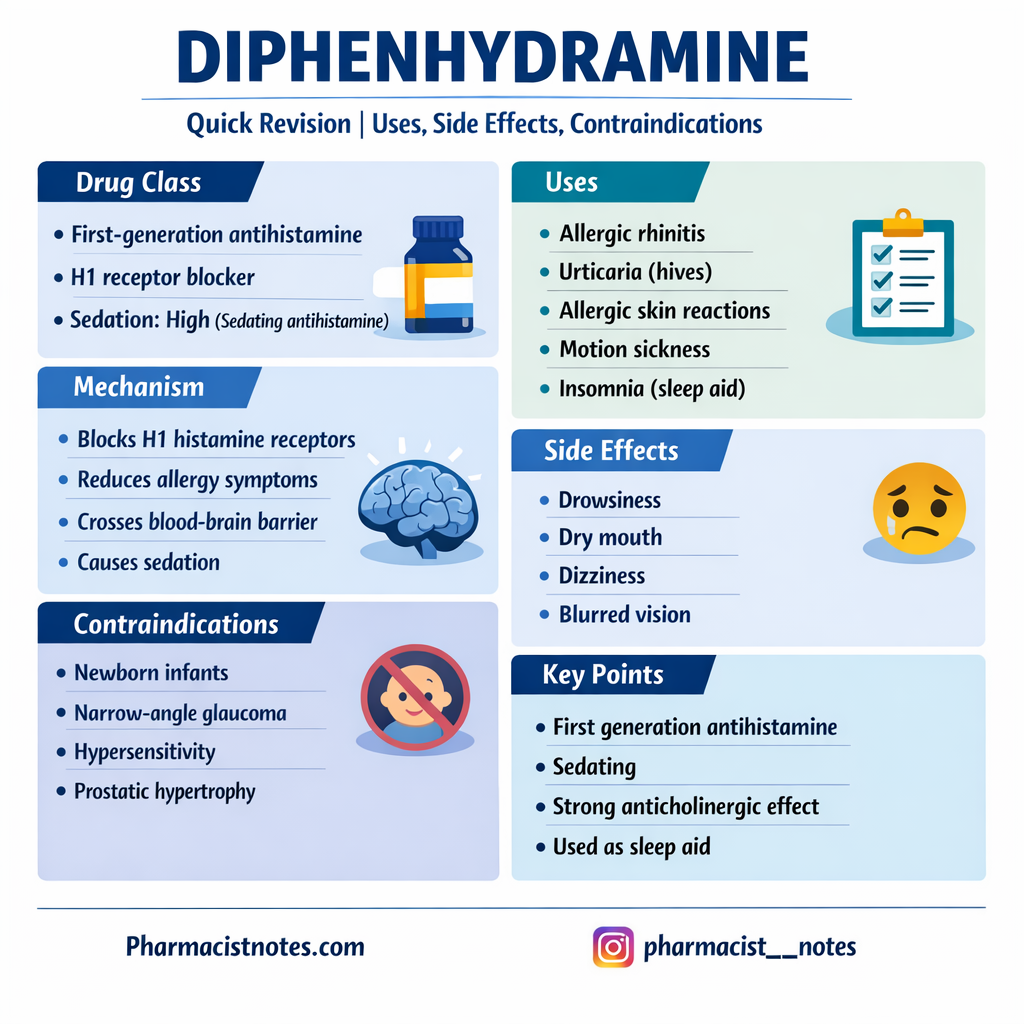
Drug Class
First-generation antihistamine
(Central and peripheral H1 receptor blocker – sedating)
H1 receptors are present in:
Brain → Sedation (minimal effect )
Skin → Itching, urticaria
Lungs → Allergic responses
Nose → Sneezing, rhinorrhea
Blood vessels → Vasodilation, edema
Peripheral H1 receptors are present in
Lungs → Allergy symptoms
Skin
Nose
Blood vessels
Central H1 receptors are present in
Brain
⚠️ Diphenhydramine significantly crosses the blood–brain barrier, causing sedation.
Brand Names
India:
Benadryl
Restamine
Caladryl (combo)
USA
Benadryl
UK / Europe:
Nytol, Benadryl
Approved By
- FDA (United States)
- CDSCO (India)
- EMA (Europe)
Available Strengths & Dosage Forms
- Tablet: 25 mg, 50 mg
- Capsule: 25 mg, 50 mg
- Syrup: 12.5 mg / 5 ml
- Injection: 10 mg / ml
Purpose / Indications
Diphenhydramine is used to treat allergic conditions, motion sickness, and insomnia. It blocks both central and peripheral H1 receptors and produces sedative effects.
Symptoms It May Cure
- Sneezing
- Runny nose
- Itching (skin, nose, throat)
- Watery eyes
- Urticaria (hives)
- Allergic skin rash
- Motion sickness symptoms
- Short-term insomnia
Dosage
Adults
Allergy: 25–50 mg every 6–8 hours
Insomnia: 50 mg at bedtime
Motion sickness: 25–50 mg
Children
As prescribed based on age and weight
⚠️ Use caution in elderly patients due to sedation risk.
Mechanism of Action of Diphenhydramine
Diphenhydramine blocks both peripheral and central H1 histamine receptors.
- Prevents histamine from binding to H1 receptors
- Reduces vasodilation
- Decreases capillary permeability
- Controls itching and mucus secretion
Unlike second-generation antihistamines:
- Causes significant sedation
- Crosses the blood–brain barrier
- Has strong anticholinergic effects
Detailed Explanation
During an allergic reaction:
- Mast cells release histamine
- Histamine binds to H1 receptors
- Causes itching, redness, swelling, sneezing
Diphenhydramine blocks these receptors and prevents allergic symptoms.
Because it enters the brain, it also causes:
Sedation
Sleep induction
Anti-motion sickness effect
Bioavailability
Definition:
Bioavailability refers to the percentage of a drug that reaches systemic circulation in an active form after administration.
Bioavailability:
Approximately 50–60%
Well absorbed after oral administration.
Half-Life
Definition:
Half-life is the time required for the plasma concentration of a drug to reduce to half of its original value.
Half-Life:
Approximately 4–8 hours
This is why multiple doses per day may be required.
Summary Statement
Diphenhydramine is a first-generation H1 antihistamine that effectively treats allergic conditions but causes sedation due to penetration into the brain.
Additional Pharmacological Points
- Crosses blood–brain barrier significantly
- Causes sedation
- Has strong anticholinergic effects
- Also acts as antiemetic
- Used as sleep aid
Side Effects
Common Side Effects
- Drowsiness
- Dry mouth
- Dizziness
- Blurred vision
- Constipation
Less Common / Rare
- Urinary retention
- Confusion (especially in elderly)
- Tachycardia
Contraindications
- Hypersensitivity to diphenhydramine
- Newborn or premature infants
- Narrow-angle glaucoma
- Severe asthma attack
- Prostatic hypertrophy
Dosage Frequency
Every 6–8 hours (for allergy)
Once daily at bedtime (for insomnia)
Not ideal for daytime use due to sedation.
Use in Special Populations
Pregnancy
- Previously Category B (old classification)
- Generally considered safe
- Use only if clinically needed
Lactation
- Passes into breast milk
- May cause sedation in infant
- Use with caution
Elderly
- Higher risk of sedation
- Risk of confusion and falls
- Use cautiously
Drug Interactions
- Alcohol (increases sedation)
- CNS depressants
- Anticholinergic drugs
- Sedatives
Storage Instructions
- Store at room temperature
- Protect from moisture
- Keep out of reach of children
Disclaimer
This information is for educational purposes only and should not replace professional medical advice. Always consult a doctor before using any medication.
Extras
It is preferred for:
✔️ Night-time allergy relief
✔️ Motion sickness
✔️ Short-term insomnia
Not ideal for:
Daytime use
Elderly patients
Long-term use
Key points / Revision

| Point | Details |
|---|---|
| Drug Class | First-generation antihistamine |
| Receptor Blocked | Central and Peripheral H1 |
| Blood–Brain Barrier | ✔️ Crosses significantly |
| Sedation | High |
| Generation | First |
| Main Uses | Allergy, insomnia, motion sickness |
| Bioavailability | ~50–60% |
| Half-life | 4–8 hours |
| Pregnancy | Generally safe |
| Lactation | Use with caution |
| Best For | Night-time allergy |
| Not Ideal For | Daytime use |


2 thoughts on “Diphenhydramine : Uses, Dosage, Side Effects, Contraindications & Safety”