Table of Contents
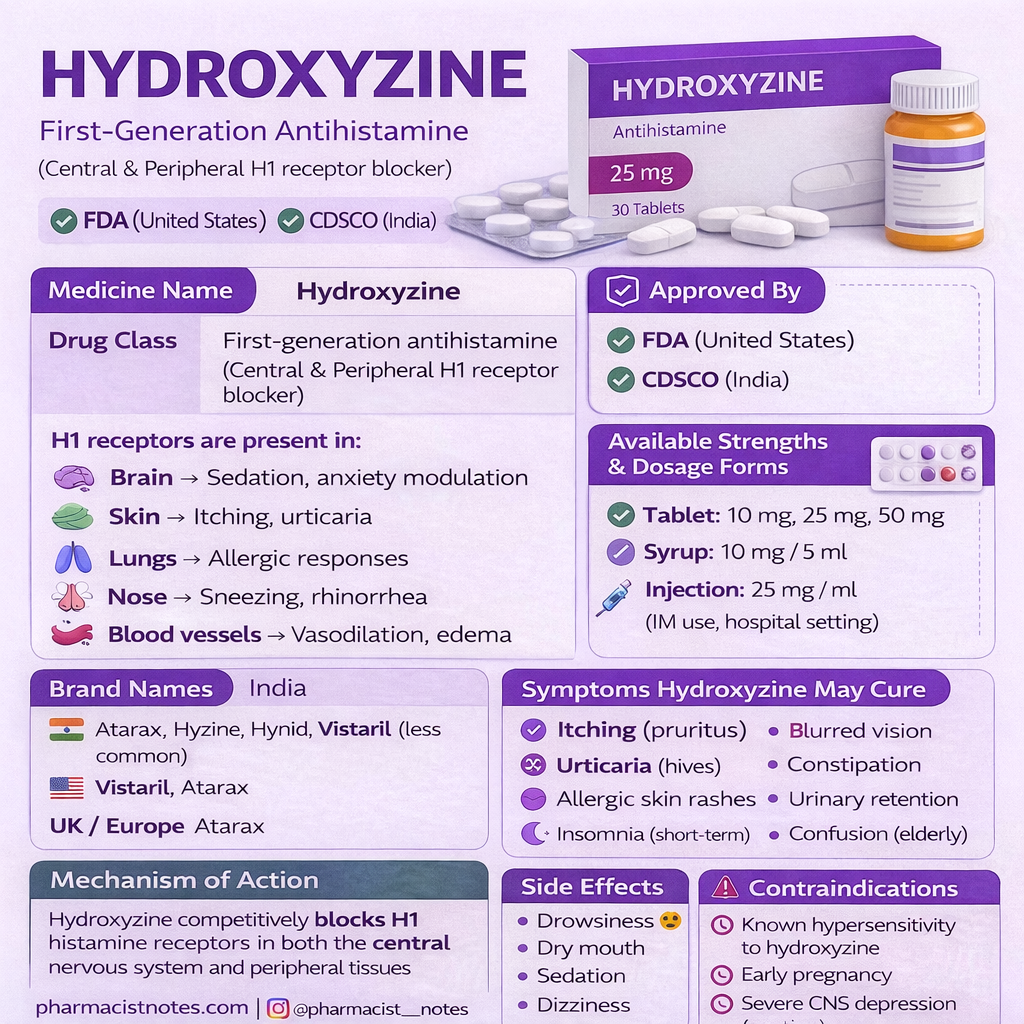
Medicine Name
Hydroxyzine

Drug Class
First-generation antihistamine
(Central & Peripheral H1 receptor blocker)
H1 receptors are present in:
- Brain → Sedation, anxiety modulation
- Skin → Itching, urticaria
- Lungs → Allergic responses
- Nose → Sneezing, rhinorrhea
- Blood vessels → Vasodilation, edema
Peripheral H1 receptors are present in
- Lungs→ Allergy symptoms
- Skin
- Nose
- Blood vessels
Central H1 receptors are present in
- Brain
Brand Names
India:
Atarax, Hyzine, Hynid, Vistaril (less common)
USA
Vistaril, Atarax
UK / Europe:
Atarax
Approved By
- FDA (United States)
- CDSCO (India)
Available Strengths & Dosage Forms
- Tablet: 10 mg, 25 mg, 50 mg
- Syrup / Suspension: 10 mg / 5 ml (paediatric use)
- Injection: 25 mg / ml (IM use, hospital setting)
Purpose / Indications
Hydroxyzine is used to treat allergic conditions, anxiety, pruritus, and insomnia due to its antihistaminic, sedative, and anxiolytic properties.
Symptoms Hydroxyzine May Cure
- Itching (pruritus)
- Urticaria (hives)
- Allergic skin rashes
- Anxiety & tension
- Insomnia (short-term)
- Motion sickness
- Pre-operative sedation
- Nausea & vomiting (adjunct use)
Dosage
Adults
- Allergy / Pruritus: 25 mg 1–3 times daily
- Anxiety: 50–100 mg/day in divided doses
- Insomnia: 25–50 mg at bedtime
Children
- ≤6 years: up to 50 mg/day (divided doses)
- >6 years: up to 100 mg/day (divided doses)
⚠️ Dose should be individualized and prescribed by a physicia.
Mechanism of Action of hydroxyzine
Hydroxyzine competitively blocks H1 histamine receptors in both the central nervous system and peripheral tissues.
It also:
- Suppresses activity in subcortical regions of the brain
- Produces sedation and anxiolysis
- Has mild anticholinergic and antiemetic effects
Detailed Explanation
Hydroxyzine is a first-generation antihistamine that easily crosses the blood–brain barrier.
Step-by-step explanation:
- During allergic reactions, histamine is released from mast cells.
- Histamine binds to H1 receptors, causing:
- Vasodilation
- Increased capillary permeability
- Itching, redness, swelling
- Hydroxyzine blocks H1 receptors → prevents histamine action
- Because it enters the brain:
- Causes sedation
- Reduces anxiety
- Induces sleep
Results:
- Itching & rashes are reduced
- Anxiety is relieved
- Sleep is promoted
Additional pharmacological points:
- Crosses the blood–brain barrier
- Causes sedation
- Has anticholinergic activity
- Hydroxyzine is metabolized in the liver to cetirizine, which is its major active metabolite.
[yes you read it right!]
What is histamine & anti histamine, receptors invloved, anti histamine generations?
Summary statement:
Hydroxyzine blocks central and peripheral H1 receptors, effectively treating allergic symptoms while also providing sedative and anxiolytic effects, making it useful in pruritus, anxiety, and insomnia.
Side Effects
Common Side Effects
- Drowsiness
- Dry mouth
- Sedation
- Dizziness
Less Common / Rare
- Blurred vision
- Constipation
- Urinary retention
- Confusion (elderly)
Contraindications
- Known hypersensitivity to hydroxyzine
- Early pregnancy
- Severe CNS depression
- Patients with prolonged QT interval (caution)
Dosage Frequency
- Usually 2–3 times daily
- Often prescribed at night due to sedative effect
In patients where pain or inflammation is a dominant symptom, antihistamines like cetirizine may be used along with other drug classes such as analgesics or NSAIDs, depending on the clinical condition.
Use in Special Populations
Hydroxyzine in Pregnancy
- Contraindicated (Category C / avoid)
Especially first trimester
Use only if benefits outweigh risks
A drug is placed in Category B when animal reproductive studies have not shown a risk to the fetus, but there are no adequate and well-controlled studies in pregnant women. That means:
- Animal studies: Did not show evidence that the medicine causes fetal harm.
- Human data: Not enough good studies yet to confirm whether it’s absolutely safe or risky.
So Category B suggests the medicine may be safer than other categories, but this is not a guarantee—doctors still use it only if benefits outweigh potential risks.
Lactation
- Not recommended
- May cause sedation in infant
Elderly
- Increased risk of confusion & sedation
- Start with lowest possible dose
Drug Interactions
- Alcohol (↑ sedation)
- Benzodiazepines
- Opioids
- Other CNS depressants
- Anticholinergic drugs
Storage Instructions
- Store at room temperature
- Protect from moisture & heat
- Keep out of reach of children
Disclaimer
This information is for educational purposes only and should not be used as a substitute for professional medical advice. Always consult a doctor or pharmacist before using any medication.
Extras
- Hydroxyzine is NOT suitable for daytime allergy relief
- Cetirizine is its active metabolite
- Preferred when itching + anxiety / sleep disturbance coexist
Key points / Revision

| Point | Details |
|---|---|
| Drug Name | Hydroxyzine |
| Drug Class | First-generation antihistamine |
| Receptor Blocked | H1 (Central + Peripheral) |
| Blood–Brain Barrier | Crosses BBB |
| Sedation | High (sedating) |
| Generation | First generation |
| Main Uses | Allergy, pruritus, urticaria, anxiety, insomnia |
| Special Uses | Pre-operative sedation, motion sickness |
| Mechanism of Action | Blocks H1 receptors → reduces histamine effects + CNS sedation |
| Metabolism | Metabolized in liver |
| Active Metabolite | Cetirizine |
| Anticholinergic Effect | Mild |
| Daytime Use | Not preferred |
| Night Use | Preferred |
| Dosage (Adult) | 25–50 mg (1–3 times daily) |
| Dosage (Children) | Up to 50–100 mg/day (age dependent) |
| Common Side Effects | Drowsiness, dry mouth, dizziness |
| Serious Side Effects | Confusion (elderly), QT prolongation (rare) |
| Pregnancy | Avoid (especially 1st trimester) |
| Lactation | Not recommended |
| Elderly | Use low dose |
| Drug Interactions | Alcohol, benzodiazepines, opioids |
| Best For | Allergy + itching + anxiety/sleep issues |
| Not Ideal For | Daytime allergy relief |


2 thoughts on “Hydroxyzine: Uses, Dosage, Side Effects, Contraindications & Safety”