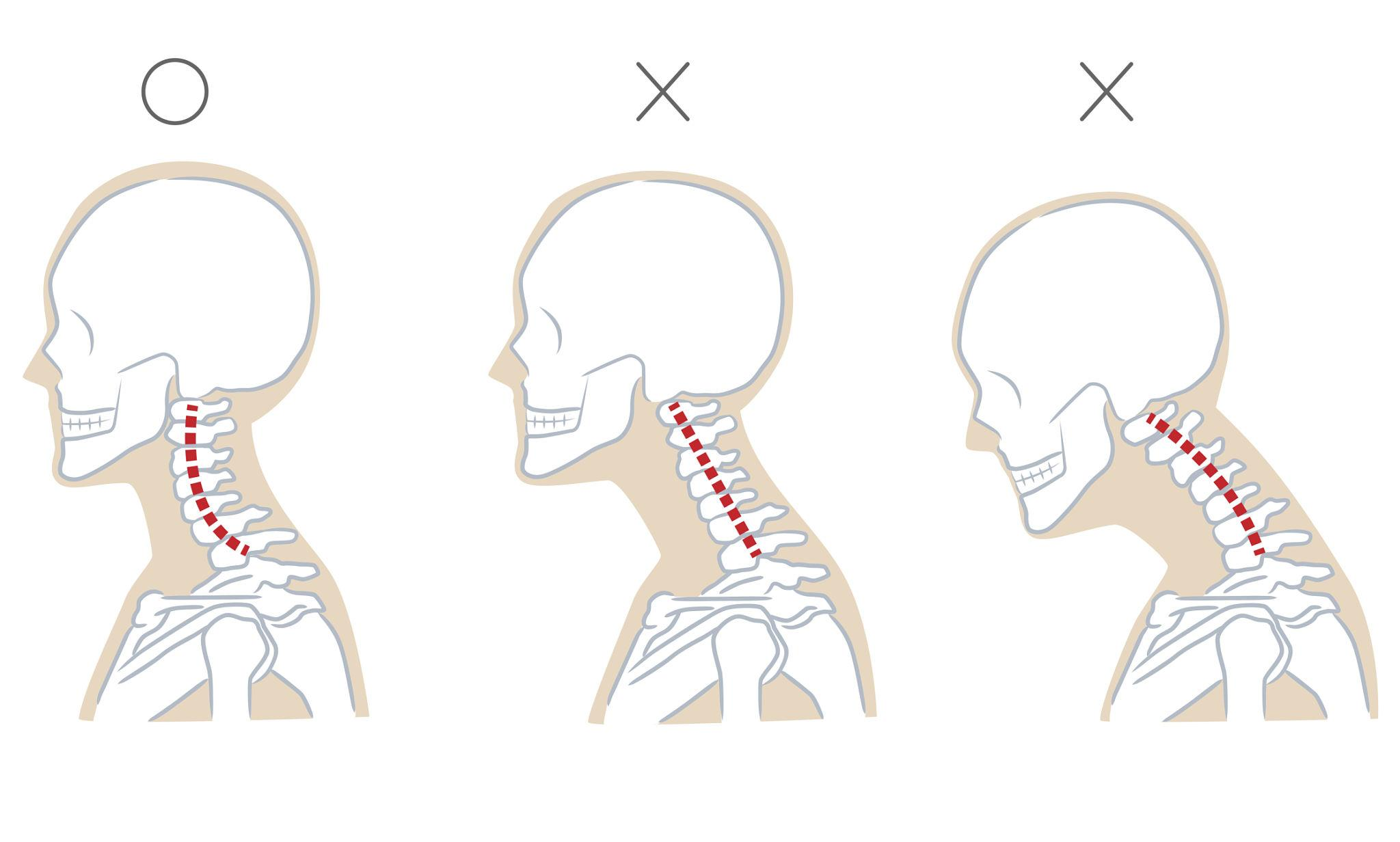
Loss of Cervical Lordosis
If you are here, then there is a very high chance that you have been dealing with neck pain, stiffness, or even dizziness for some time now, and at some point you decided to consult a doctor because the problem was not going away. After examination, your doctor might have advised an X-ray, and once the report came, you were told that you have something called loss of cervical lordosis.
Now this term itself sounds a bit technical and concerning, but in simpler words, what your doctor meant was that the upper part of your spine, that is your neck, has lost its natural curved shape and has become straight. Many people are told the same thing in even simpler language like “your neck curve is gone” or “your spine has become straight.”
And the moment you hear this, it is completely natural to feel worried, because now the main question that comes to your mind is whether this condition will improve with time or whether it is something permanent that you will have to live with.

Why does cervical lordosis get lost?
Now this is something very important to understand, because most people think that something serious has suddenly gone wrong with their spine, but in reality, in many cases, it is not as complicated as it sounds.
The most common reason behind loss of cervical lordosis is simply the way we use our neck in our daily life. Today, most of us spend hours looking down at our phones, working on laptops, or sitting in one position for a long time. Because of this, the head slowly starts moving forward from its natural position, and the neck muscles remain under constant strain.
Over time, these muscles become tight and imbalanced. Some muscles become overactive, while others become weak. As a result, the natural curve of the neck starts getting reduced, and in many cases, it appears straight on an X-ray.
Another very common reason is muscle spasm. Sometimes, due to sudden strain, wrong sleeping posture, or even stress, the neck muscles go into spasm. When this happens, the body tries to protect the area by tightening the muscles, and this can temporarily straighten the cervical curve. In such cases, the loss of lordosis is not permanent but more of a protective response.
Long sitting hours also play a major role. When you sit for extended periods without proper back and neck support, your posture gradually becomes poor without you even realizing it. This continuous stress on the neck affects the alignment of the spine over time.
In some people, especially as age increases, degenerative changes in the spine can also contribute. The discs may lose their hydration and flexibility, which can slightly alter the natural curvature. However, this is usually a slower process and not the main reason in younger individuals.
So in simple words, loss of cervical lordosis is often not due to a single big problem, but rather a combination of daily habits, posture, muscle imbalance, and sometimes temporary muscle spasm.
What is Approach of a good doctor
When you go to a doctor with symptoms like neck pain, stiffness, or dizziness, the approach is usually not limited to just giving medicines.
A good doctor first tries to understand the actual cause behind your symptoms, because dizziness and neck pain are not always due to a single problem.
There are usually two important things a doctor focuses on:
Cervical spine (X-ray)
ENT (ear-related evaluation)
The reason behind this is simple.
Dizziness can occur not only due to neck issues like loss of cervical lordosis, but also due to problems in the inner ear, such as BPPV (Benign Paroxysmal Positional Vertigo) and other vestibular disorders.
And in many cases, both problems can exist together.
Now you might wonder, how is that possible?
Let me explain.
It has been commonly observed that people who spend long hours working on laptops — especially those in fields like IT, sales, or BPO — often have a sitting job with poor posture. Sitting for long hours, bending the neck forward, and continuously using mobile phones can lead to neck stiffness and eventually loss of cervical lordosis.
At the same time, many of these individuals also use headphones or earphones for long durations, which can sometimes make them more prone to inner ear-related issues or imbalance sensations.
That is why a good doctor does not rely only on a cervical X-ray.
They will also ask you about:
- any ear-related symptoms
- episodes of spinning sensation
- imbalance or nausea
They may also perform simple clinical checks, like asking you to move your eyes in different directions (left, right, up, and down) — this is part of checking your extraocular movements (EOM) and balance coordination.
In many cases, an ENT opinion is also taken to rule out inner ear causes.
Along with this, your doctor may also check:
- whether your vision is normal
- if you are using glasses properly (if prescribed)
- and whether eye strain could be contributing to your symptoms
Only after evaluating all these factors together does the doctor start treatment.
Because the goal is not just to reduce symptoms temporarily, but to identify and treat the actual cause behind your dizziness and neck problem.
What is the treatment?
Now let’s talk about the most important part — treatment.
When you visit a doctor with symptoms like neck pain, stiffness, or dizziness, the first goal is to relieve your current symptoms, because at that moment, discomfort is what is affecting your daily life the most.
So initially, your doctor will usually prescribe:
painkillers for neck pain and stiffness
medicines to control dizziness
cervical lordosis medicine
One of the most commonly prescribed medicines for dizziness is Cinnarizine
It helps by calming the balance system and reducing the spinning sensation, but as discussed earlier, it mainly controls symptoms and does not treat the root cause.
Another medicine that may be prescribed is Betahistine
This works by improving blood flow in the inner ear and is often used for longer-term management of vertigo-related symptoms.
For neck pain and inflammation, doctors may prescribe Aceclofenac
It helps in reducing pain and inflammation in the cervical region.
Along with this, a muscle relaxant like Thiocolchicoside
may be given to relieve muscle spasm and stiffness, which is a very common reason behind loss of cervical lordosis.
Important thing to understand
All these medicines are mainly used to control symptoms:
- reduce pain
- reduce dizziness
- relax muscles
ButThis is not the actual treatment of the problem.
The real treatment starts now
Once your symptoms are under control, the real work begins.
And that is:
Physical treatment
This may include:
- Physiotherapy
- Neck exercises
- Posture correction
- Lifestyle changes
Because in most cases, especially when the problem is due to posture or muscle imbalance, only medicines are not enough
You need to:
- correct the way you sit
- improve muscle strength
- and restore normal movement of your neck
Cervical lordosis exercises
1. Chin Tuck Exercise

2. Shoulder retraction

3. Head movement exercises


Being a pharmacist, I am not an expert in these exercises, but I have discussed them with doctors and gathered this information after careful research from trusted sources to help you better understand what can actually work.
Each image includes the source link it has been taken from, so you can explore it further if you want.
Is loss of cervical lordosis permanent?
The answer is no. Loss of cervical lordosis is not permanent in most cases, especially when it is caused by posture issues or muscle spasm. With the right approach, including posture correction and regular exercises, the natural curve of the neck can improve over time.
However, this does not mean it should be taken lightly. If you ignore the condition and do not make any changes in your lifestyle, it can gradually lead to more serious problems. You may start experiencing symptoms like tingling in the arms, numbness, increased dizziness, and persistent stiffness.
Over time, continued stress on the neck can lead to faster degeneration of the spine. In severe and neglected cases, the condition may progress to a stage where surgical intervention becomes necessary, which always carries its own risks.
That is why it is important to take action as soon as you are aware of the problem. Early correction with proper exercises, posture improvement, and lifestyle changes can not only control the condition but also help in reversing it in many cases.
Thus for the question Is loss of cervical lordosis reversible?, the answer is yes.
Disclaimer
The information provided in this article is for educational and awareness purposes only and should not be considered as a substitute for professional medical advice, diagnosis, or treatment.
While every effort has been made to ensure the accuracy of the information, individual cases may vary. Conditions like dizziness, cervical issues, or loss of cervical lordosis can have multiple causes, and proper diagnosis requires clinical evaluation.
As a pharmacist, I aim to simplify and explain medical concepts in an easy-to-understand way, but I am not a specialist in physiotherapy or medical diagnosis. The exercises and suggestions mentioned are based on general medical understanding and discussions with healthcare professionals, and may not be suitable for everyone.
Always consult a qualified doctor, physiotherapist, or healthcare provider before starting any treatment, exercise, or medication.
Do not ignore professional medical advice or delay seeking treatment based on the information provided here.


One thought on “Is Loss of Cervical Lordosis Permanent?”